
Where to open it
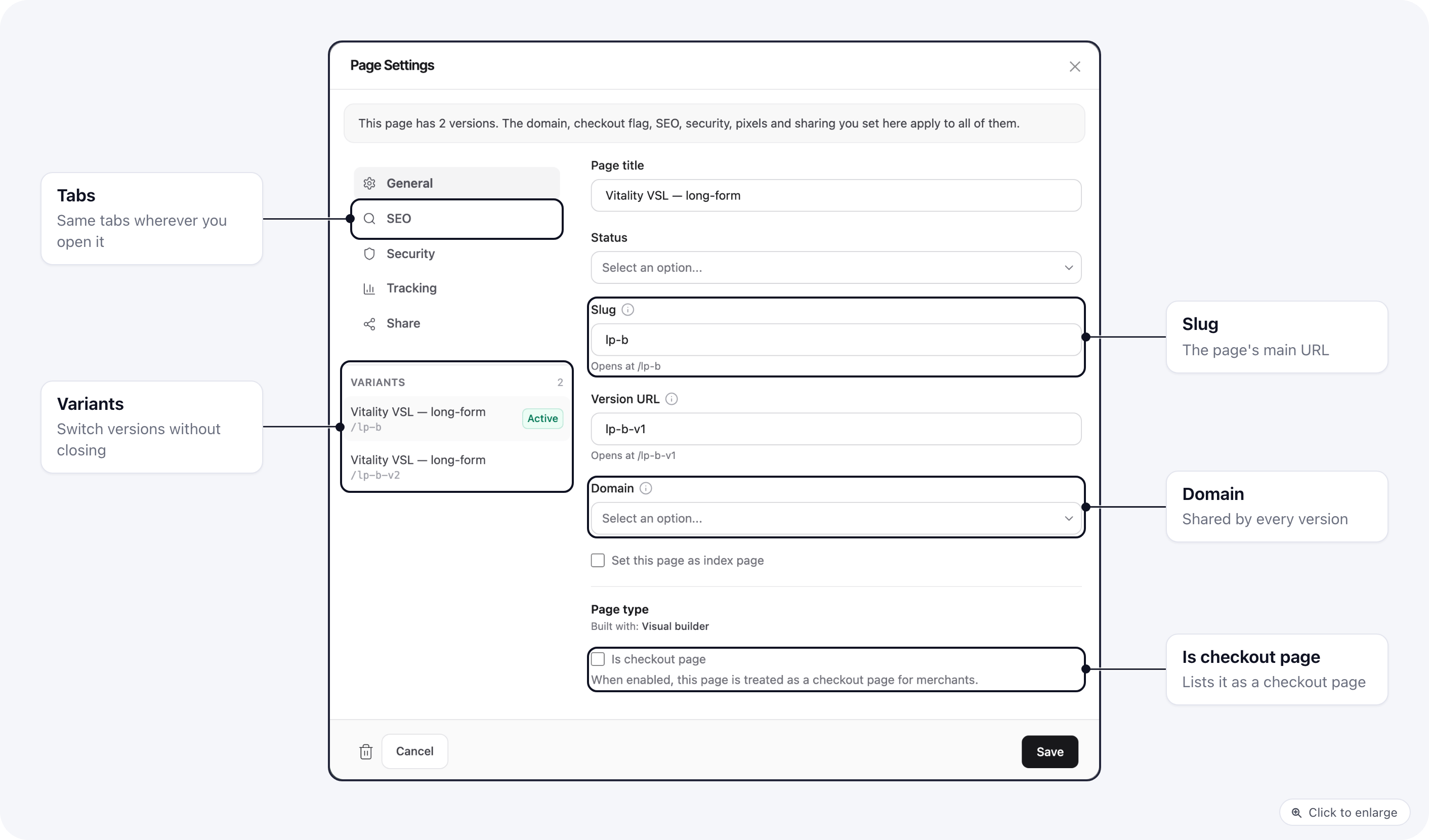
The same dialog opens from every place you can edit a page, with the same tabs and fields:- Pages list: the row’s Settings action.
- Visual builder: the gear at the bottom of the left rail.
- Visual builder, Versions panel: the gear next to a version.
- Code editor: the page’s settings in the file tree, or Ctrl/Cmd + E on the open page.
- Quiz builder: the settings mode of the quiz’s page.
General
Hover the next to a field name for a short explanation.
SEO
Title, favicon, a title shown while the tab is in the background, meta description, and whether the page is listed insitemap.xml and llms.txt (see SEO). Code editor pages write
their own <head>, so they have no SEO tab.
Security
Funnel-only access (visitors who did not come through a funnel are sent to the index page), disable right click, prevent search engine indexing, require login (with the URL to send logged-out visitors to) and require a password.Tracking
Show affiliate pixels, mark the page as an upsell page (only the affiliate upsell pixels fire), the Google Analytics measurement ID, the Meta pixel ID, custom JavaScript and custom header code.Share
Lets other ElasticFunnels projects clone the page: open to anyone, behind a secret key, or only for users who signed up with one of your referral codes.Pages with versions
A page with versions is one page with several versions of its content. Some settings belong to the page and are the same on every version; the rest each version has on its own.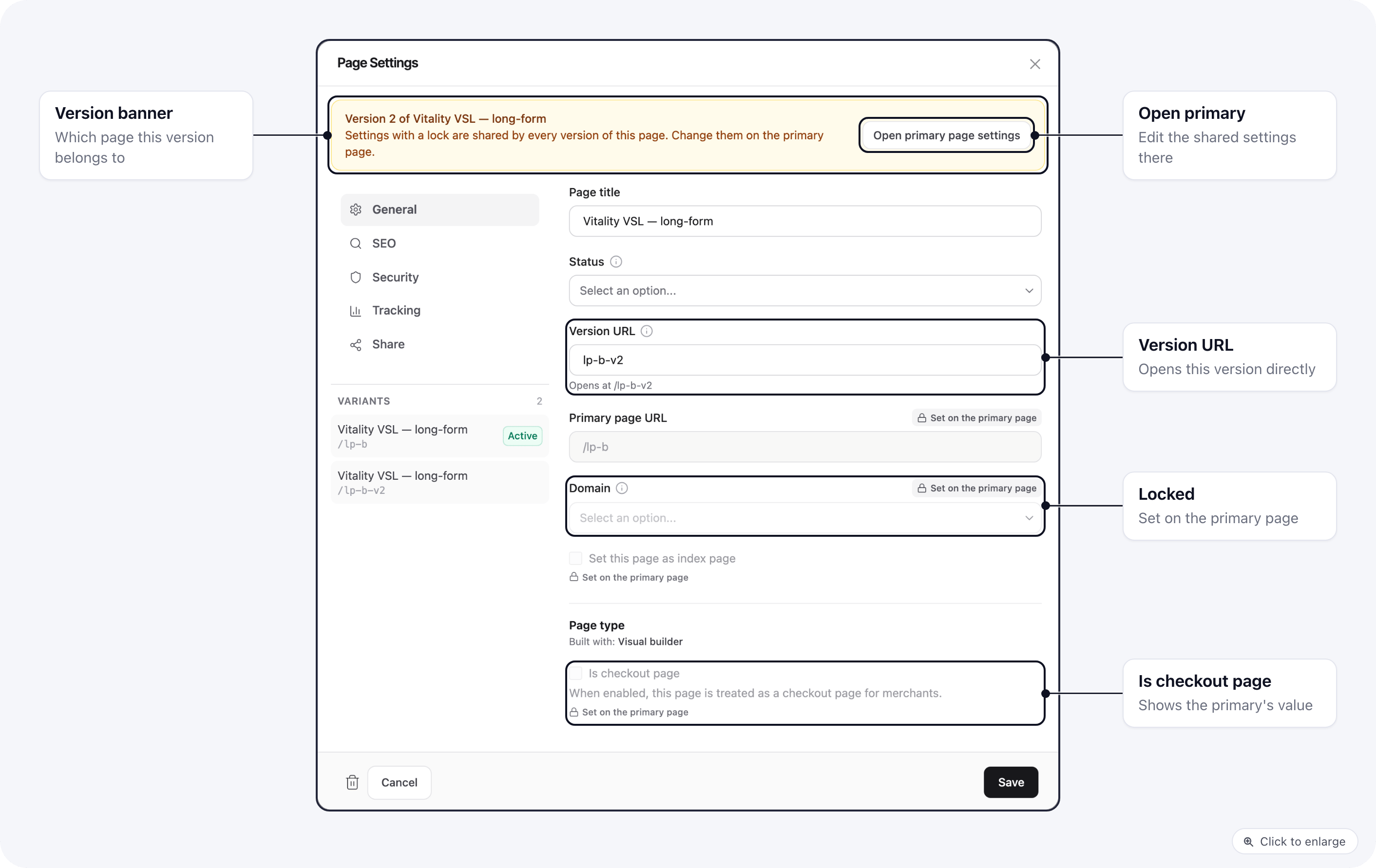
- On the primary page (the live version), a note at the top says how many versions the page has. Shared settings you save there apply to all of them.
- On any other version, a banner says which page it is a version of. Shared settings show their current value with a lock and Set on the primary page; tabs where everything is shared say so at the top. Open primary page settings switches the dialog to the primary page.
- The Variants list on the left of the dialog switches between versions without closing it.
- Setting a version live keeps the page’s shared settings: the new live version takes over the domain, checkout flag, SEO, security, pixels and sharing, and the index page flag moves with it.